

Roman pizza · Opening a business
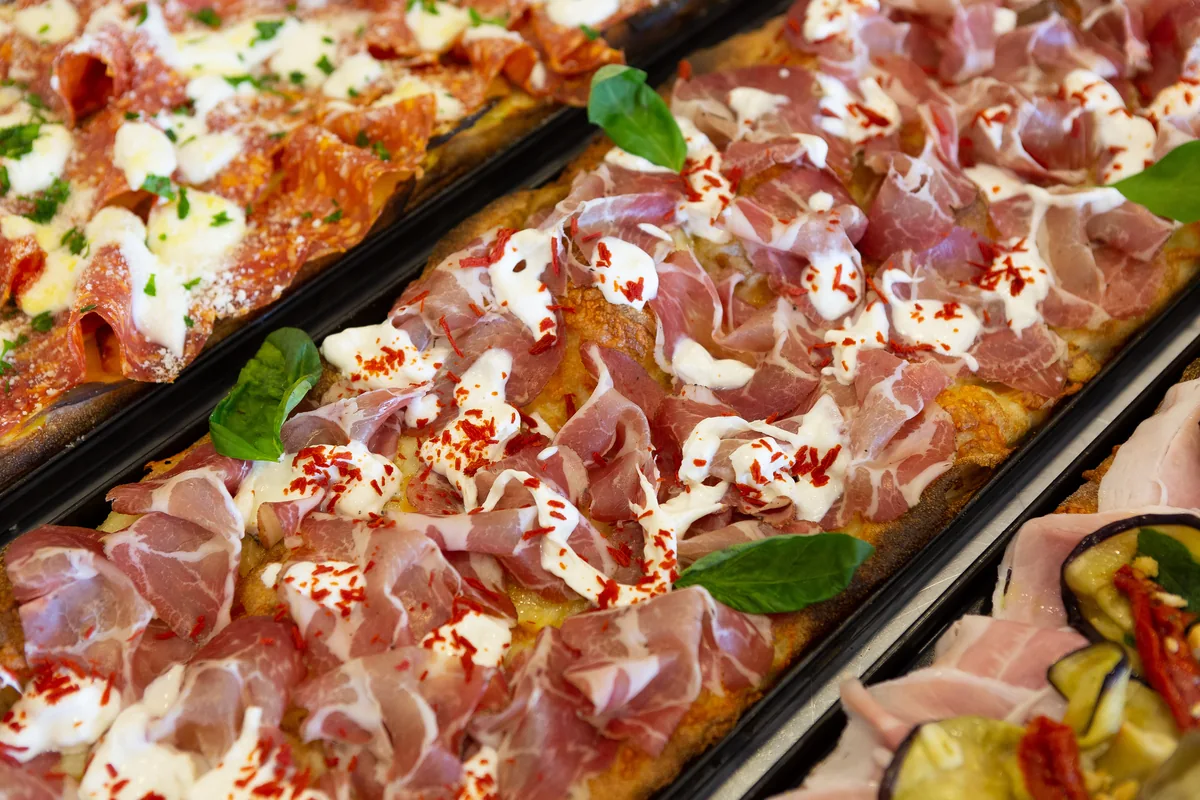
Opening another pizza shop is one decision. Building a shop with a clear Roman identity is another. For an American entrepreneur, pizza al taglio can be the core of the business: an airy crumb, a crisp base, a colorful counter and a recognizable way of serving pizza. Marco Montuori, founder of Pinsa School, explains how he approaches that project, drawing on openings and training work in the United States.
Start with a Roman identity, not an extra menu item
The starting point is a simple question: why should someone choose your shop? A Roman pizza concept needs an answer that customers can taste and understand. The dough, toppings, display, portions and staff explanation should tell the same story. Adding supplì, the Roman rice croquettes, can strengthen that identity when the kitchen can produce and serve them consistently.
Roman pizza already has a presence in the US, so being the only operator is not something to assume. Look at your actual neighborhood and competitors. The opportunity is to build a distinctive product and experience, rather than compete only through discounts. Rent, labor, demand and execution still determine whether the business works.
What makes Roman pizza al taglio different?
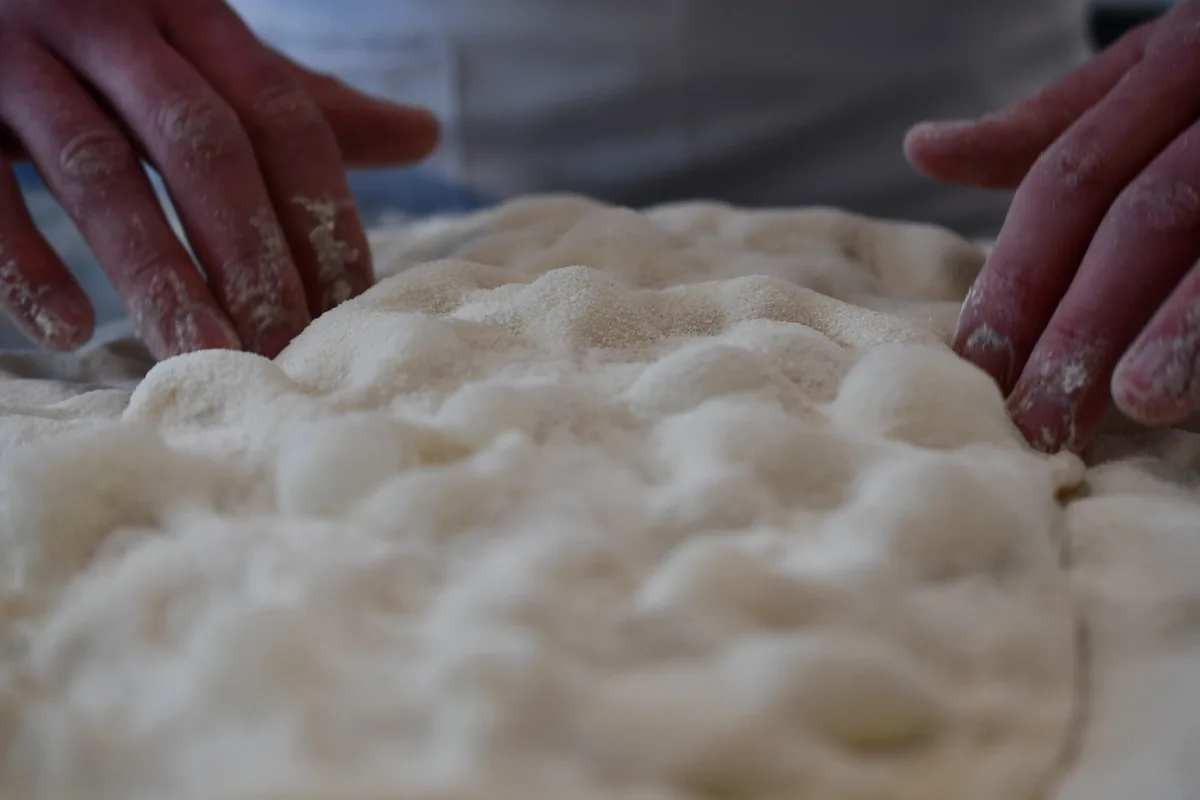
Pizza al taglio is baked in rectangular trays and sold in portions. In the style taught at Pinsa School, the dough is a central part of the eating experience: a crisp underside, an open crumb and enough structure to carry the toppings without becoming a dense block. Hydration alone does not produce that result; mixing, fermentation, handling and baking have to work together.
New York and Detroit pizza have their own traditions and excellent practitioners. The useful comparison is the finished product you want to sell. Marco’s preference is firm: the dough should be worth eating on its own, not simply support a heavy layer of toppings. Here, “light” describes texture and the bite; it is not a promise about calories or how every customer will digest it.
Introduce the dough through familiar flavors
An unfamiliar format becomes easier to try when the toppings offer a point of reference. In his American projects, Marco has used recognizable combinations alongside Roman flavors. A tomato-and-cheese slice or a spicy salami topping can introduce the new dough before the customer explores more unusual choices.
Amatriciana, cacio e pepe and a carefully developed carbonara-inspired topping can then express the Roman identity. They should be complete recipes, with controlled quantities and suitable preparation methods, not names pasted onto random ingredients. Keep enough familiar options to make ordering easy, then let selected specialties give the counter personality.
Assess existing equipment before buying more
A mixer and an oven may already be available, but their suitability needs testing. Can the mixer develop the planned dough without excessive heating? Can the oven fit the trays, recover during a rush and bake the base evenly? Does the refrigeration capacity match the production schedule? These questions matter more than buying a machine just because it is marketed for pizza.
Pinsa School starts with the equipment and workflow the operator has, then identifies genuine limitations. Sometimes adjustments are sufficient; sometimes a mixer, oven or refrigeration arrangement is unsuitable. Tray sizes, work surfaces, cooling racks and circulation through the kitchen belong in the same assessment.
Train for the opening, including the quiet hours
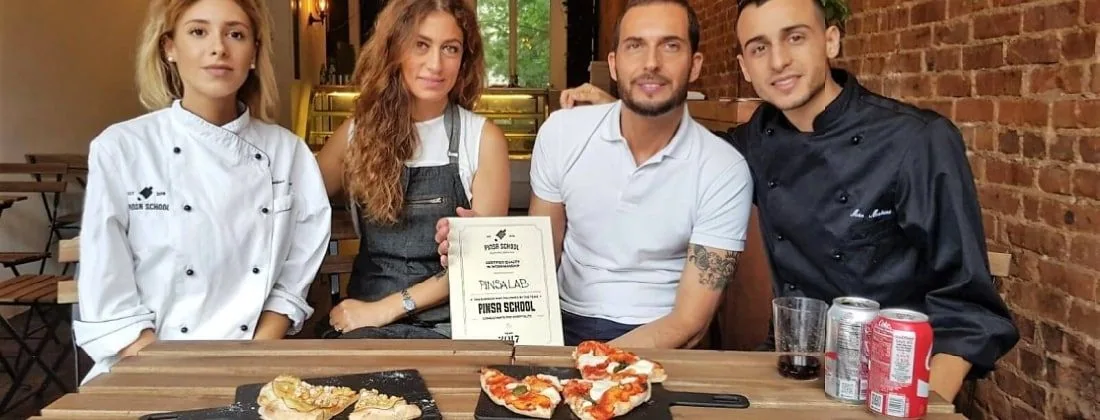
A good opening depends on what happens before the first order. The team needs a repeatable sequence for mixing, storing, baking, topping and replenishing the counter. Prepare for a realistic level of demand and record what sells. A beautiful full display is not useful if the business repeatedly produces more pizza than it can sell well.
Marco’s experience includes work in Los Angeles, Chicago, Kansas City and New York, including Brooklyn. He also worked in Toronto, Canada. In his account, customers responded enthusiastically to pinsa and Roman tray pizza; the demanding part was establishing the new operation and training people. These experiences inform the method, without predicting the results of a new shop.
Build a premium offer through consistency
An Italian name alone does not justify a higher price. The customer needs a reason to come back: a recognizable crust, balanced toppings, clear portions and dependable service. Cost every recipe, include labor and waste, and test the price against your local market. Avoid treating an unfamiliar product as an automatic shortcut to higher margins.
If you want to open a Roman pizza shop in the US, begin with your city, your intended format and your team’s experience. A Roman pizza al taglio course develops the product skills; opening consultancy connects those skills with your equipment, menu and production plan.
Questions and answers
Is Roman pizza the same as pinsa?
No. Roman tray pizza and pinsa are different products and production choices. Decide which one will define your concept before planning the equipment and menu.
Can I learn Roman pizza without previous pizza experience?
Yes, training can start from the fundamentals. Practice and a realistic opening plan are still needed to turn newly learned skills into reliable service.