

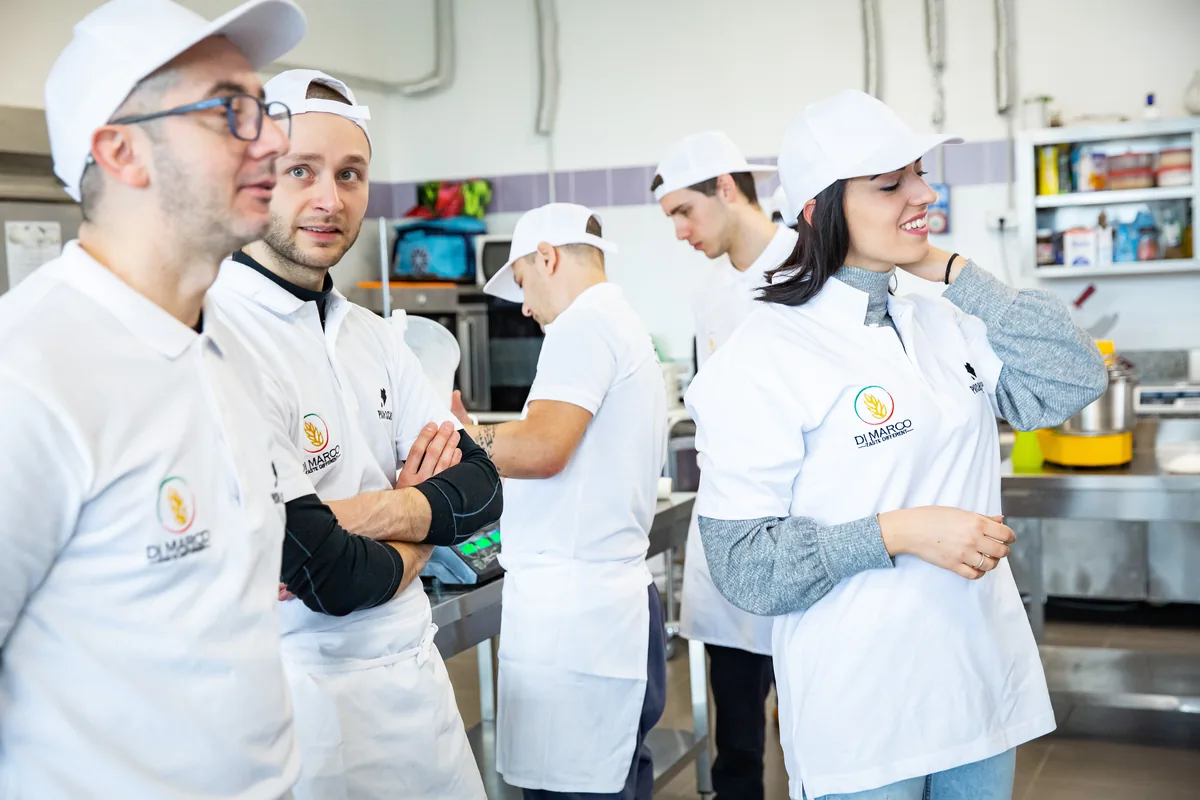
When looking for a pizza making course in Rome, the most useful question is very concrete: what do you want to know when you return to your pizza parlor? Opening a pizzeria by the slice, introducing pinsa to a restaurant, and learning from scratch require a program tailored to the product you have in mind.
This answer makes choosing easier. You can look at a program and identify the skills you need, imagine how you'll spend your days, and figure out what kind of expertise you want to take home.
Start with the pizza you want to serve
Roman-style pizza in a pan leads you to think about rolling, baking in the metal, toppings, and the selection of pizza counters. Roman-style pinsa works on a different format and management, which can be found in pinsa restaurants, restaurants, and street food outlets.
In our pizza chef courses in Rome we dedicate a specific path to each product. Pinsa and pan pizza have things in common, especially in the attention to dough and baking, and techniques that deserve to be explored in their entirety.
If you're still choosing your restaurant's menu, start with the guide Pinsa Romana or Pan Pizza: Which Course to Choose. It helps you connect the product to the way you want to sell it.
Practice pays off when someone watches your work
Initially, a rolling error can be the result of a few centimeters: the hand tilted too far, excessive pressure, the body in an awkward position. A nearby instructor sees that detail and can correct it before it becomes a habit.
This is why we build the course around benchwork. Each attempt should provide you with information: what worked, what to change, how to try again. Repetition becomes valuable when you know which movement you're practicing.
We scale the quantities to the class size, with approximately 10–15 kg of dough per student per day. In large classes, we work alongside other teachers to ensure the initial stages are followed with the attention they require.
Three days, in a precise order
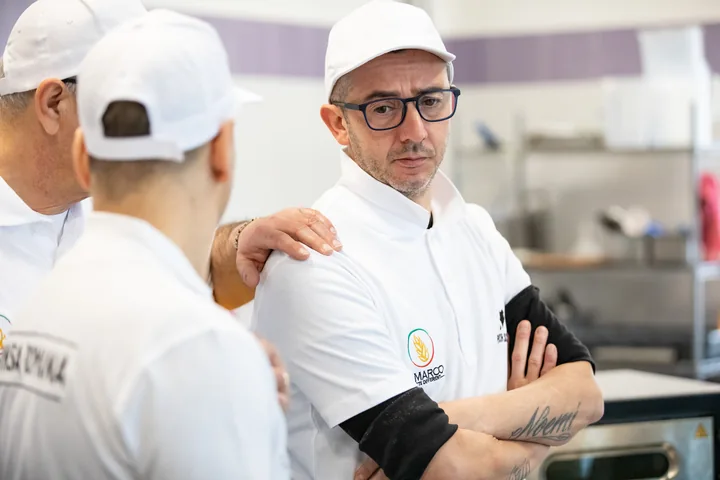
The professional Pinsa Romana and Pizza in Teglia courses each last three days, for 21 hours. We start immediately with the dough rolling and repeat it throughout the course. From the second day, the preparation of the toppings and the baking process come into full swing.
The ingredients are prepared with the final product in mind: cutting, baking, moisture, consistency, and when to add them. Then there's the oven, where you learn to recognize the base, the drying process, and the right time to take it out of the oven.
Marco describes this journey in the article about the three-day intensive pizza making course. It's the method we've been using since 2016, with people starting from scratch and professionals who want to delve deeper into a specific skill.
Bring a question from your project to school
Want to add pinsa to your menu? Need to build a pizza pan counter? Do you already work with an oven and want to understand how to better organize your outings? A concrete question makes the training even more useful, because it helps you connect each step to your business.
For very specific needs, private training allows you to tailor the training to your chosen theme. When the project also involves the menu, production, and launching the restaurant, consulting comes into play.
Organize your days as a work investment
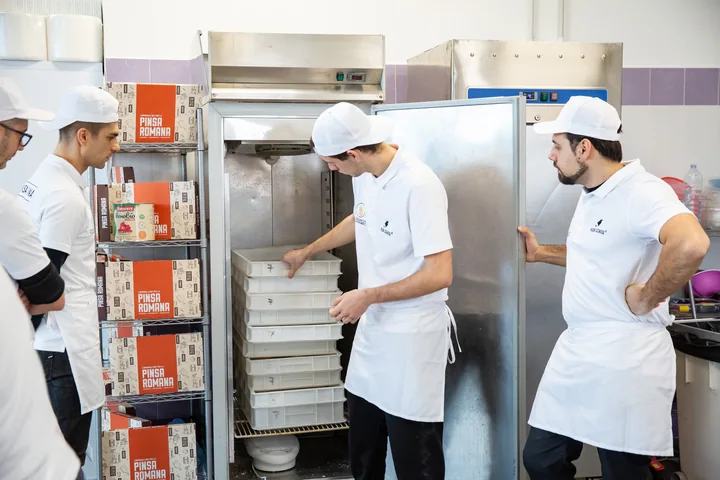
The Monday-Wednesday formula leaves the weekend free, a useful option for those who already run a business. The school is located at Di Marco, at Via Lago dei Tartari 3/F in Guidonia Montecelio (Rome). On the location page you'll find the laboratory and directions.
First, choose the product you want to work on. Then check the program, dates, and registration details on the course page. The right program is one you can already connect to a pizza you want to learn to make well, with your own hands.
All articles