


During a busy service, the longest part of the bake can become the longest part of the wait. Par-baking lets you do some of that work in advance. To make it useful, plan the first bake and the finish as two parts of the same product.
Decide how the pizza will be served
Start with the finished slice or pinsa. Will you complete it to order, display it at a counter or reheat individual portions? That choice helps determine how far to take the first bake and which toppings to add at each stage.
A lightly set base and a nearly finished tray pizza serve different purposes. Give each a clear place in your production plan so the team knows what remains to be done before service.
Watch the base as well as the surface
A tray introduces a layer of metal between the dough and the oven floor. Its temperature affects how heat reaches the base. A par-baked pizza placed back into a cold tray can colour on top while the underside is still catching up.
Finishing directly on the oven floor changes that heat transfer and the texture of the base. Test the sequence you intend to use, with the same dough weight and tray. The right method is the one that produces the pizza you want within your service routine.
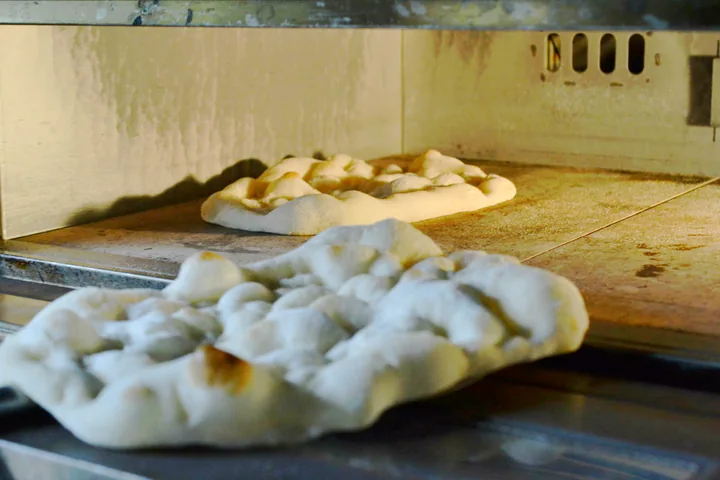
Give steam a way out
After the first bake, place the base on a rack so steam can escape from underneath. Stacking warm bases traps moisture and changes the texture you have just worked to create.
Build cooling, protected storage, labelling and refrigeration into the kitchen’s food safety procedures, with suitable time and temperature controls. Prepare quantities around the next service and keep the rotation easy for the team to follow.
Prepare the topping line for the finish
Think about each ingredient’s role. A topping that needs heat belongs in a different stage from a fresh leaf, a delicate cream or an aromatic finishing oil. Having those decisions written into the recipe makes the final steps easier to repeat.
For tray pizza, simple bases such as potato, onion or tomato can support several final combinations. A planned selection gives the counter variety while keeping the underlying production manageable.

Test it as your customer will eat it
Follow a trial batch through the whole sequence: first bake, cooling, storage where needed, topping and final bake. Taste the base and crumb after the same short wait the customer will experience. Record what you would change, then repeat the test.
That full sequence is part of learning to run production with confidence. In the Roman pizza al taglio course and Pinsa Romana course, we connect handling, toppings and oven work so you can understand what each stage contributes to the finished product.
All articles