
The starting point was a team already at work
At New Paradise, training has become part of a business with multiple productions and skills. The staff had already introduced Pinsa Romana and wanted to delve deeper into its production. We started with that product, with people accustomed to getting their hands dirty and working for the customer.
Training those with experience requires attention to detail. A skill learned in one process may need to be adapted to another: the pressure on the dough, the way it is stretched, the cooking time. Comparing the ingredients at the counter allows us to highlight these differences and give a reason for each adjustment.
The street food format must work down to the last bite.
A pinsa in street food format requires balance between base, filling, and portion. The consistency must support the sauce, the ingredients must be prepared for that product, and the finish must make the product recognizable.
When working on the recipes, we connected these aspects to the production line. Preparing a vegetable, adjusting a cream, choosing the right moment to add an ingredient are decisions that change the outcome. Training helps the team recognize them and repeat them with a clear approach.
Putting pinsa in a laboratory with multiple productions
In a business that combines a bar, pastry shop, and rotisserie, each product must find its place in the day. We approached pinsa production along with organizing preparations and controlling food costs, linking recipes, quantities, and ingredient yields.
Knowing the cost of a portion and the labor required to make it helps you make decisions. A single preparation can be used in multiple recipes, a finishing touch can add character with just a few steps, a clear weight can make the product more consistent. These are practical tools for those who produce every day.
Continuing to learn is a professional choice.
The request for the New Paradise stemmed from the desire to improve an existing product. It's an attitude we recognize in many professionals: stopping to think about a process, discussing it, and then returning to look at it more closely.
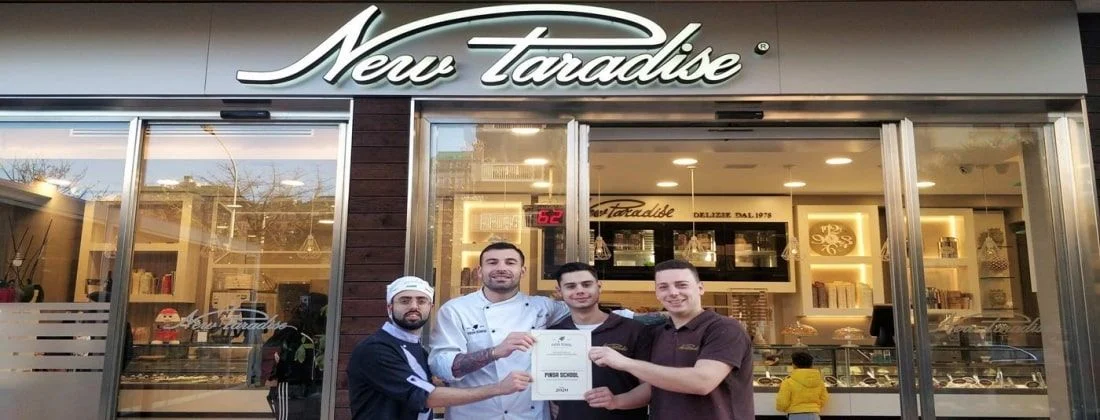
The group photo preserves the memory of that journey. Its meaning lies in the shared work: bringing the Pinsa Romana technique to an expert team and connecting it to the needs of the laboratory. It's one of the ways training can support a business even after it opens.